
Cantonal street in Lausanne at golden hour, Spitex car parked, nurse walking in with a bagStill, 16:9: a cantonal street in Zürich or Lausanne at golden hour, a Spitex car parked, a nurse with a bag walking in
Autonomous Care OS® · the category

Systems that deliver the work of running care.

A category originated by Caryfy AI for systems that deliver the work of running home and community-based care, rather than tools people must operate. CareBravo® is the first commercial implementation.
The definition

Autonomous Care OS, noun.

1.

An operating system that delivers the work of running a care agency — scheduling resolved, claims submitted clean, compliance files audit-ready — rather than tools an owner must operate to produce those results herself.

2.

A Work as Services architecture: routine and high-volume work is executed by the system, authority boundaries are explicit, and human judgment remains named and accountable where required.

Autonomous Care OS® is a registered trademark. The category definition is maintained at autonomouscareos.com.

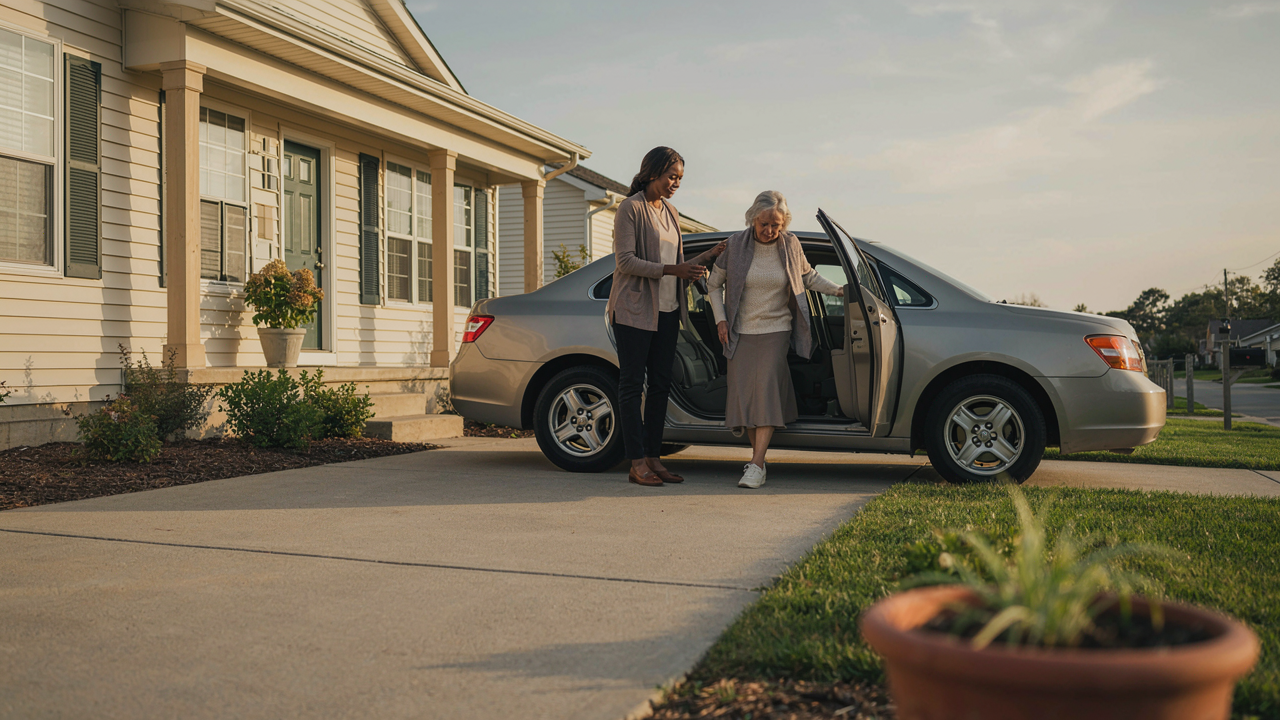
Caregiver helping a client into a car outside their home — care happening where people liveStill, 16:7: a caregiver helping a client into a car outside a home — the work happening where people live
The distinction that defines it

Relocating screen work is not removing it.

A cheaper person, offshore

Still the screen work.

A different platform

Still the screen work.

An AI agent that hands output back for line-by-line approval

Still the screen work. Review is production relocated, not removed.

An Autonomous Care OS crosses the line the rest of the market stops at: the work itself is taken — inside one compliant boundary, with accountability held where the outcome is delivered.

The economics of the category

Aligned by construction.

Priced on work, not seats

An Autonomous Care OS aligns economics to completed work, outcomes or care throughput — not to the number of people operating software. Commercial implementations can put fees at risk against defined outcomes.

Authority explicit

What the system may do, what must be confirmed, what must be signed, and where a named human owns the exception — written down before the work runs.

Accountability native

Human in presence, by design: append-only records, auditable actions, and the human signature where care and law require it.

Why care rewards a system that learns.

Care is the domain AI has not seen.

Frontier models are trained on the internet. Home and community-based care is not on the internet. Every action in it gets a verdict: the payer accepts or rejects the claim, the visit verifies or it does not, the survey passes or fails.

The work leaves the owner's hands.

Confirm-back before every write. Append-only records. Authority checks run as tools, not as model judgement. We know exactly what should be autonomous, and exactly what should never be.

Priced on the care it helps deliver.

No seats. A share of billed revenue, and a 99% clean-claim guarantee in writing. Proven where the payer is hardest, so it runs anywhere the administrative envelope is compressing.

Where the category's model is built

Where it is built.

Atlanta
Caryfy Inc. The operating base.

CareBravo® in operation across 130 Medicaid home and community-based care agencies. Georgia DCH EVV vendor listing. Where the ground truth is generated, one claim, one visit, one survey at a time.

Operating footprint today: United States.
Lausanne
Caryfy Sàrl. The sovereign model.

Care's model, built on Apertus, Switzerland's open-source model (weights, data, recipe), deployed inside Swiss data boundaries with one variant per language a caregiver actually speaks. Also where the price is found: the highest-willingness-to-pay home-care market with no mandate behind it.

Research and price discovery. Switzerland enters the footprint when revenue makes it true.

Why sovereignty is an engineering requirement

Swiss FADP, EU GDPR and US HIPAA each fix where data may sit and who may act on it. The operating layer encodes residency and authority per jurisdiction so the same system can be configured, not rebuilt.

Why language is a safety property

A confirm-back in the wrong idiom is a wrong action. Per-language model variants, language-aware intent parsing and culturally correct confirm-back templates are how the system stays safe in German, French, Italian, Hindi, Spanish and Tagalog working combinations.

What is being tested, and where

Switzerland: price discovery and category validation for Europe. Private Spitex operators billing three payers per client under twenty-six cantonal rulebooks, with no federal mandate. The CareDrain diagnostic, with interRAI-compatible identifiers, measures administrative load before and after. Research partners are named here when agreements are signed.

The research programme's detail is published in English. No product is claimed outside the United States.

Plain answers.

What is an Autonomous Care OS?

An operating system that delivers the work of running a care agency — scheduling resolved, claims submitted clean, compliance files audit-ready — rather than tools an owner must operate to produce those results herself. Caryfy AI originated and registered the category. CareBravo® is the first commercial implementation.

What is home and community-based care?

Long-term care delivered where people live — at home and in the community — rather than in a hospital or nursing facility. In the United States it is funded mainly by Medicaid as home and community-based services (HCBS); in Switzerland it is delivered by Spitex organisations. It is the largest and fastest-growing setting of care, and the one whose administration is still run by hand.

How is an Autonomous Care OS different from care software with AI features?

Software with AI features hands output back for approval; the owner still operates the screen. An Autonomous Care OS takes the work inside one compliant boundary, with authority written down before the work runs and a named human owning every exception.

Where is the category's model built?

The ground truth is generated in the United States, on CareBravo's operating base. The sovereign, multilingual model is built in Lausanne by Caryfy Sàrl on Apertus, Switzerland's open-source model, inside Swiss data boundaries.